Why Every Business Needs Digital Marketing and a Professional Website in 2026
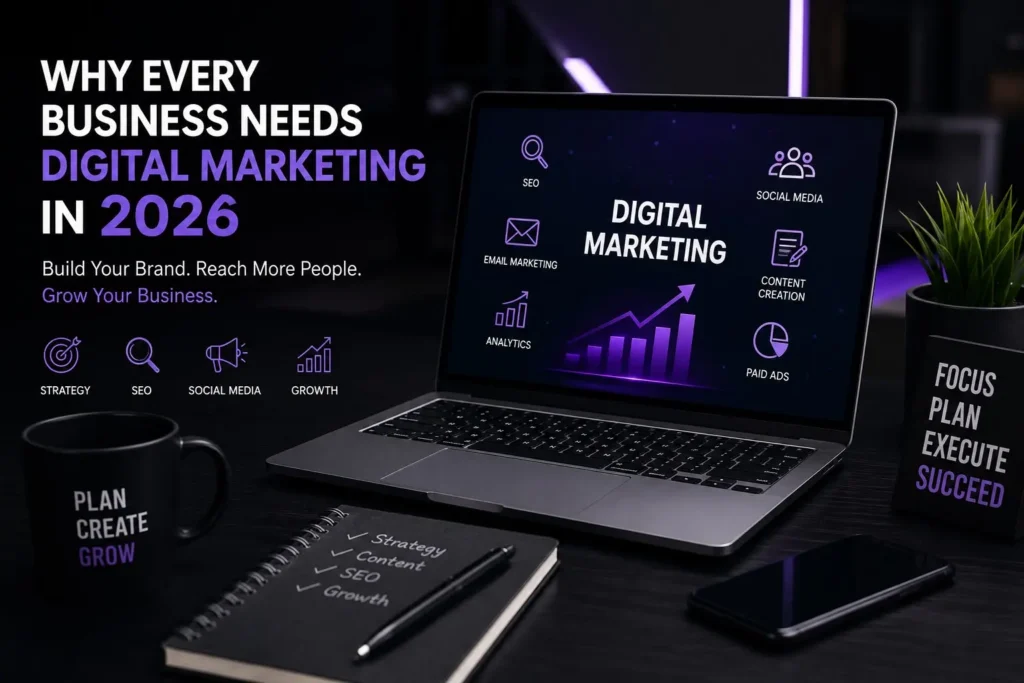
In today’s digital world, customers search online before making almost every buying decision. Whether they need a restaurant, clothing store, hospital, educational institute, or local service, their journey usually begins with a Google search. Businesses that fail to establish a strong online presence risk losing valuable customers to competitors who are easier to find online. Digital marketing has transformed the way businesses communicate with their audience. It enables companies to reach the right people at the right time while measuring every campaign’s performance. Combined with a professional website, digital marketing creates a powerful foundation for business growth, customer engagement, and long-term success. What Is Digital Marketing? Digital marketing is the process of promoting products or services through online channels such as search engines, social media platforms, websites, email, and online advertising. Unlike traditional marketing, digital marketing allows businesses to target specific audiences based on their interests, location, age, and online behavior. The primary goal of digital marketing is not only to increase website traffic but also to generate qualified leads, build trust, improve customer relationships, and boost sales. Why a Professional Website Matters A website serves as the digital headquarters of your business. It is often the first impression potential customers have of your brand. A professionally designed website reflects credibility, professionalism, and reliability. An effective website should include: A website that offers an excellent user experience encourages visitors to stay longer, explore your services, and contact your business. The Importance of Search Engine Optimization (SEO) Search Engine Optimization (SEO) helps your website appear higher in Google search results. When people search for products or services related to your business, SEO increases the chances that they will discover your website before your competitors. SEO includes several important elements: Keyword Research Understanding what your customers are searching for allows you to create content that answers their questions and matches their needs. On-Page SEO Optimizing titles, headings, meta descriptions, images, URLs, and internal links helps search engines understand your content more effectively. Technical SEO Technical improvements such as website speed, mobile optimization, XML sitemaps, structured data, and secure connections improve your website’s overall performance. Content Marketing Publishing informative blogs, guides, and service pages demonstrates expertise and provides value to visitors while improving search rankings. Link Building Earning backlinks from trusted websites increases your website’s authority and credibility in search engines. The Power of Content Marketing Content is one of the strongest tools in digital marketing. Helpful and informative content builds trust with potential customers before they even contact your business. Popular content formats include: When your content solves real problems, visitors are more likely to trust your business and become loyal customers. Social Media Marketing Billions of people use social media every day. Platforms like Facebook, Instagram, LinkedIn, YouTube, and X allow businesses to connect directly with their audience. Successful social media marketing focuses on: Building an active social media presence helps increase brand awareness and customer loyalty. The Benefits of Local SEO For businesses serving specific locations, Local SEO is essential. It helps nearby customers discover your services when searching for businesses in their area. Local SEO strategies include: These techniques improve visibility in Google Search and Google Maps, making it easier for local customers to find your business. Why Website Speed Is Important Website speed significantly affects user experience and search rankings. Visitors expect websites to load within a few seconds. Slow websites often experience higher bounce rates and lower conversions. Ways to improve website speed include: A faster website creates a better experience for users and improves SEO performance. Mobile-Friendly Design Most internet users now browse websites on smartphones. A responsive website automatically adapts to different screen sizes, providing a seamless experience on mobile devices, tablets, and desktops. Mobile optimization improves accessibility, increases engagement, and supports better search engine rankings. Measuring Success One of the greatest advantages of digital marketing is the ability to measure performance. Businesses can monitor: These insights help businesses make informed decisions and continuously improve their marketing strategies. Common Digital Marketing Mistakes Many businesses struggle because they overlook important fundamentals. Common mistakes include: Avoiding these mistakes creates a stronger online presence and better business results. The Future of Digital Marketing Digital marketing continues to evolve with advancements in artificial intelligence, voice search, automation, personalized experiences, and data-driven marketing. Businesses that embrace these innovations while focusing on providing genuine value to customers will remain competitive in the years ahead. Final Thoughts A professional website and a well-planned digital marketing strategy are no longer optional—they are essential for business success. By investing in SEO, high-quality content, responsive web design, and effective online marketing, businesses can attract more customers, build lasting relationships, and achieve sustainable growth. Whether you are launching a new business or improving an existing one, building a strong digital presence is one of the smartest investments you can make. Success online comes from consistency, quality, and a commitment to delivering value to your audience.